
Venetian Plaster Living Room
Slaked Lime Plaster
This is what the plaster walls in your great grandparents' house were made of. Starting with wood lath, a coarse "scratch coat" (plaster mixed with shrinkage-preventing aggregates, such as horse hair) was applied followed by a "brown coat" (plaster mixed with sand), and finally a fine skim coat. Composed of limestone that has been baked at extreme temperatures to remove all impurities, hydrated—or slaked—lime plaster comes in an aged putty form, so, unlike other options, you don't have to hand-mix it and you're not under a time constraint to apply it.
Pure white in its basic form, it now comes in a huge range of colors. Left unpainted, like clay plaster, it takes in moisture and releases it—and unlike clay plaster can be used in kitchens and baths (but shouldn't be exposed directly to water). If desired, a protective layer of bee's wax or Marseilles soap can be added.

Architectural preservationists Master of Plaster of Columbia, South Carolina, specialize in slaked lime plasters, and resident designer, Lauren Dillon, is a fount of information about why, where, and how to use it. She explains: "After being applied, hydrated lime plasters go through a process called curing wherein they don't necessarily dry out like a clay or a paint, but they absorb carbon dioxide and complete the lime cycle on your surface, in essence turning back to stone—so when people say lime plaster looks and feels like stone or marble, it's because it truly is." Photograph by Justine Hand for Remodelista.
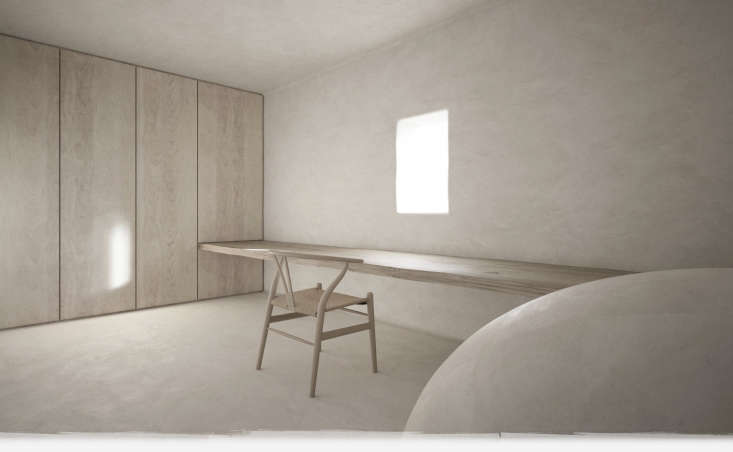
The project shown here was created using the line's Fine Grain Plaster not only on the walls but also the floor. Corners, by the way, are the trickiest to trowel, and, once finished, they're the area that's most fragile and prone to chipping.
Source: https://www.remodelista.com/posts/modern-plaster-walls-clay-plaster-slaked-lime-plaster-venetian-plaster-and-more/

0 komentar:
Posting Komentar